
How Component Choices Affect the Cost of Custom Bluetooth Wireless Earbuds
Speaker and Acoustic System Choices Speakers directly define sound quality and user experience. Cost differences come from: Speaker size and diaphragm material Tuning complexity Acoustic chamber design Low-cost speakers may meet basic sound requirements, but they often struggle with: Distortion at high volume Poor bass response Inconsistent quality across batches Premium acoustic components increase BOM cost but improve: Brand perception User satisfaction Long-term product reviews
12/26/20252 min read

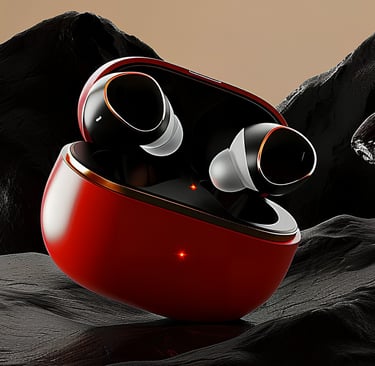
Why Component Selection Is the Biggest Cost Driver
When buyers search for custom Bluetooth wireless earbuds, one of the most common questions is:
“Why do prices vary so much between different manufacturers?”
In most cases, the answer is not labor or factory margin—it is component selection.
Search terms like custom earbuds cost, Bluetooth earbuds BOM, and earbuds component price clearly show that buyers want to understand what they are paying for, not just the final quote.
This article explains how core components directly affect the cost, performance, and long-term reliability of custom Bluetooth wireless earbuds.
Chipset Selection and Its Impact on Cost and Stability
The chipset is the “brain” of Bluetooth wireless earbuds and one of the most influential cost factors.
Different chip solutions affect:
Bluetooth version and stability
Power consumption and battery life
ANC and call noise reduction performance
Firmware flexibility and future updates
Entry-level chipsets may reduce unit cost, but they often come with:
Limited firmware support
Higher latency
Lower long-term stability
Mid-to-high-level chipsets cost more initially but reduce failure rate, after-sales risk, and update limitations.
For buyers, the key decision is not “cheap or expensive,” but whether the chipset matches the target application and market expectations.
Speaker and Acoustic System Choices
Speakers directly define sound quality and user experience.
Cost differences come from:
Speaker size and diaphragm material
Tuning complexity
Acoustic chamber design
Low-cost speakers may meet basic sound requirements, but they often struggle with:
Distortion at high volume
Poor bass response
Inconsistent quality across batches
Premium acoustic components increase BOM cost but improve:
Brand perception
User satisfaction
Long-term product reviews
Buyers targeting EU or US markets often prioritize consistent audio quality, while price-sensitive markets may accept simpler solutions.
Battery Type, Capacity, and Safety Considerations
Battery selection affects both cost and product reliability.
Key cost-related factors include:
Battery capacity and cell quality
Charge cycle lifespan
Safety certifications
Lower-cost batteries may look attractive on paper but can lead to:
Shorter lifespan
Swelling or overheating risks
Certification difficulties
High-quality battery solutions add cost but reduce:
Failure rate
Warranty claims
Safety concerns
For long-term brand development, battery quality should never be treated as a secondary consideration.
Housing Materials and Structural Design Cost
The outer shell of custom Bluetooth wireless earbuds affects durability, comfort, and appearance.
Cost differences are influenced by:
Plastic grade or composite materials
Structural reinforcement design
Surface finishing and coating
Cheaper materials reduce unit cost but may result in:
Poor drop resistance
Faster wear
Inconsistent appearance
More robust materials and refined structures increase initial tooling cost but improve durability and perceived value.
Charging Case Configuration and Cost Implications
The charging case is often overlooked, yet it plays a critical role in cost and user experience.
Factors affecting cost include:
Battery capacity in the case
Charging method (Type-C, wireless charging)
Structural complexity and hinge durability
A well-designed charging case improves:
Product usability
Brand perception
Overall product value
Ignoring charging case quality often leads to negative user feedback, even if earbuds themselves perform well.
How Component Choices Influence Certification and Compliance Costs
Component selection also impacts certification:
Certain chipsets simplify FCC and CE testing
Battery quality affects safety testing outcomes
Materials influence RoHS and REACH compliance
Choosing components without considering compliance may increase:
Testing failures
Redesign costs
Time-to-market delays
Experienced OEM/ODM manufacturers help align component choices with certification requirements from the start.
Balancing Cost, Performance, and Market Positioning
Successful custom Bluetooth wireless earbuds projects are not about minimizing cost—they are about optimizing value.
Buyers should consider:
Target market price expectations
Required performance level
Long-term brand strategy
A well-balanced BOM reduces risk, improves product stability, and supports sustainable growth.
Conclusion: Smart Component Choices Reduce Total Project Cost
While component upgrades may increase initial unit cost, they often reduce:
Quality issues
After-sales costs
Market complaints
Understanding how components affect total cost helps buyers make informed decisions and avoid short-term thinking.
Contact
Reach us anytime via email or WhatsApp
Mail:info@inpoteheadphones.com
WhatsApp:+86 18208481245
© 2025. All rights reserved.